I’ve been fortunate enough to make my living writing, speaking, and advising about the impact of technology on humanity for quite a few years now. Most commonly, though, my audiences tend to be business leaders, and what I write and speak and advise about most often is how they can adopt a digital transformation strategy that helps the company succeed while keeping the human in focus and respecting human data.
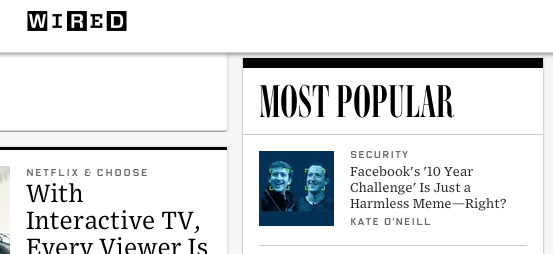
So the massive mainstream media reaction to my viral #10YearChallenge tweet and subsequent piece in WIRED was in some ways a switch in perspective: from talking to businesses about human data, to talking to humans about business use of their data. And it gave me the chance to address a far more universal audience than usual — on BBC World News, Marketplace, and NPR Weekend Edition, among many other outlets — in a cultural moment so widely discussed, it was referenced in the top article on the Reddit homepage and mentioned on The Daily Show with Trevor Noah. My goal through it all was to spark greater awareness about how much data we share without realizing it, and how we can manage our data wisely. Just as the goal of my work is to help amplify the meaning in the experiences businesses create for the humans they do business with, my hope in connecting with a mainstream audience was to encourage people to participate in experiences meaningfully and mindfully. People all over the world gave me an overwhelming amount of feedback: some worried, some praising, some critical. I listened as openly as I could to everything I could.
With all that listening, I know that some common questions remain. I see many of the same recurring themes in comments on Twitter and elsewhere. So I’m using this opportunity here, at home on my own company’s site without the time limits and fleeting news cycles of a major news channel, to address a few of them, and I hope they will, in their own small way, be part of the conversation we carry forward.
Let’s get this one out of the way first, since it’s been the biggest misunderstanding throughout this whole deal:
It’s funny: I didn’t say Facebook did it, and quite frankly, it wouldn’t matter. I was musing on the fact that the meme was creating a rich data set, and pondering aloud what that data set could theoretically be used for. In any case, it was a thought experiment, not an accusation. In my WIRED article I expanded on the thought experiment and did not accuse Facebook of having engineered it. In fact, more importantly, as I wrote there:
The broader message, removed from the specifics of any one meme or even any one social platform, is that humans are the richest data sources for most of the technology emerging in the world. We should know this, and proceed with due diligence and sophistication.
— excerpt from my article in WIRED
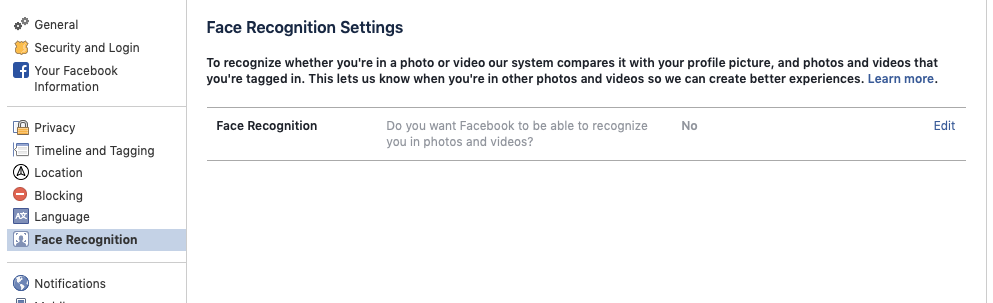
That said, though, I wouldn’t have made any definitive statements from the beginning claiming that Facebook didn’t or wouldn’t have done something like this. I’m sure there are plenty of well-meaning people in the company’s leadership, but between psychological experiments, Cambridge Analytica, and various leaks and breaches, there have been too many missteps, lapses, and outright errors in judgment on Facebook’s part for them to be above suspicion when it comes to violations of data security and trust.
Nonetheless, although it was a very common misconception, I genuinely don’t suspect that the meme began with Facebook — and I don’t believe that matters. What matters is that we use these discussions to deepen our thinking about personal data, privacy, and trust.
If you think of your data as money, you may have a better instinct for why you need to manage it well, and take care not to spend it loosely or foolishly. I’m not a fan of the idea of data as currency (partly because I think the human experience is more dimensional than a monetary metaphor conveys), but just this once I think it may be a helpful comparison. And as long as you know you’re safe, not getting lied to or ripped off, this “data is money” comparison may help illustrate why it can be worth it to spend it on experiences that matter to you.
In terms of actionable steps, here are a few helpful resources:
Personally, one easy step I take is to use the On This Day feature on Facebook to go through my posting archive day by day. I may change the permissions on old content, or delete a post completely if it seems like it no longer serves me or anyone else to have it out there.
I also have recurring reminders on my calendar to do reviews and audits of my online presence. I do what I call a weekly glance, a quarterly review, and an annual audit. For the weekly session, you can assign yourself one platform each week, and review your security settings and old content to make sure there isn’t anything out there that you no longer want to share. The quarterly review and annual audit may entail different activities for you, but for me they also involve updating old bios and links in various places, so it becomes a strategic review as well as a security check.
All of this is relevant, and I’ll unpack some of these issues more in future articles. The short answer, though, is that with some of these uses, such as Apple Pay, you take an educated guess that the company collecting your data will safeguard it, because the company bears some risk if they screw up. But not all data sharing carries proportional risk on both sides, so think critically before using these services.
At least for now, pay for your fried chicken with cash, not your face.
That’s a whole other article. (I will say I personally haven’t done a commercial DNA test because bad outcomes always seemed possible.) The topic does relate to the rest of this, and it does matter that we’re 1) cautious of using commercial services like this, and that 2) we hold companies accountable to adhere to the uses we agreed to, and not to overstep what we understood to be our contract.
The standards and precedents are not yet well defined for the use and protections on data collected by smart home devices like smart speakers listening passively for a command. The safest thing to do is hold off on using them, and the second-safest thing is to turn them off when not in use.
While I did address some of the issues and opportunities with smart home automation and devices in Tech Humanist, this is again a topic I’ll dig into more in future articles.
The vast amount of personal data transmitted and collected by business, government, and institutional entities is what powers algorithmic decision making, from ecommerce recommendations to law enforcement. And this vast data and broad algorithmic decision-making is also where machine learning and artificial intelligence takes root. Artificial intelligence, broadly, has the chance to improve human life in many ways. It could help address problems associated with world poverty and hunger; it could improve global transportation logistics in ways that reduce emissions and improve the environment; it could help detect disease and extend healthy human life.
But machines are only as good as the human values encoded into them. And where values aren’t clear or aren’t in alignment with the best and safest outcomes for humanity, regulations can be helpful.
The European Union’s General Data Protection Regulation, or GDPR, that went fully into place in May 2018 is for now the most comprehensive set of regulatory guidelines protecting individuals’ data. And American tech companies have to play by these rules: just this week, Google got hit with a 50 million euro fine for violating the term that requires companies to produce clear disclosure on the data they collect from consumers.
In the meantime, just as with climate change, we need efforts on the macro and micro scale: the experts tell us that for any kind of real reduction in impact on the environment we need big movement from commercial and industrial entities which produce the lion’s share of emissions, but that doesn’t mean that, say, you shouldn’t put your soda bottle in the recycling bin, not the trash. We’re learning more and more how important it is for us to be mindful of our ecological footprint; we also need to learn how to be mindful of our digital footprint.
I would advise doing so, yes.
Oh, heck no. By all means, I am very pro-fun. Even when it comes to digital interactions.
It’s easier to have fun when you know you’re reasonably safe, though, right? The biggest takeaway from this discussion about the possible side effects of the #10YearChallenge should be to remember that when any meme or game is encouraging you — and large groups of other people — to share specific information about yourself, it’s worth pausing before you participate. It’s relevant to wonder who might be collecting the data, but it’s far more important to think what the collected data can do.
But share the meaningful parts of your life online with friends and family, and enjoy being able to follow their updates about the meaningful parts of their lives. That has certainly been the most wonderful benefit of social media.
Not only am I pro-fun, I am also very pro-technology. I love tech, and I genuinely think emerging technologies like AI, automation, and the Internet of Things — all largely driven by human data — have the chance to make our lives better. (As I wrote in Tech Humanist, I believe we have the chance to create the best futures for the most people.) But to achieve that, we need to be very mindful about how they can make our lives worse, and put measures in place — in our government, in our businesses, and in our own behavior — to help ensure the best outcomes.
When people ask me about the future—especially when it comes to technology, business strategy, or organizational transformation—they often want predictions. Clean, confident statements about...
I. Introduction: Why Strategic Foresights Matter More Than Trends (And Why We’re Publishing This in June) A. Breaking the Year-End Prediction Cycle Every December,...
An Analysis Through the Models of Tech Humanist, Pixels and Place, A Future So Bright, and What Matters Next Your phone buzzes at 6:47...
Water is the essence of life, and yet, it’s a resource that is often taken for granted. With climate change and industrial growth putting...
What is the Future of Work? As we step into 2024 and beyond, the conversation around work, jobs, and the workplace continues to evolve....
The Economist has an interesting read on the metals shortage the world faces: https://www.economist.com/finance-and-economics/2023/09/11/how-to-avoid-a-green-metals-crunch “By the late 2030s there will probably be enough new...
The future may be unknowable, but it isn’t necessarily unpredictable. Either way, we can do our best to prepare for it. Executive Summary: For...
Nothing changes faster than the trends you haven’t been paying attention to. But in the past few years there’s been SO MUCH OTHER STUFF...
When I launched this company in 2014, I chose the word “insights” with intention. I thought of it as my duty to my clients...
Ah, 2021. The year we’ve been looking forward for the entire century that was 2020. Rationally, we know the calendar year is an arbitrary...
This time of year is my absolute favorite because for me it’s so much about relaxed reflection and setting intentions for the year —...
By now it seems everyone and their dog has shared their predictions and observations about the the trends of 2015, so it may seem...