One of the themes shaping my work this year is “the future of trust and truth.” In an era characterized by disagreement over basic facts, where algorithmically-optimized social media platforms show us the truths we most want to see, the roles of truth and trust in ethics, in systems design, and in human experience strategy are crucial for us to understand. I’m examining questions such as: What does truth mean to us as humans; how does truth relate to belief, to science, to law; how does truth relate to trust; and so on.
And of course:
How do divisive politics figure into our trust in institutions, and how does our sense of truth suffer from exposure to misinformation and disinformation?
And then, the big question as it relates to my work and the work of many of my clients:
What does it mean to bring machines into this dynamic? To cross-pollinate these very human concerns with data, with algorithms, with machine learning? For algorithms optimized for platform-specific engagement and retention to shape our exposure to news and opinions?
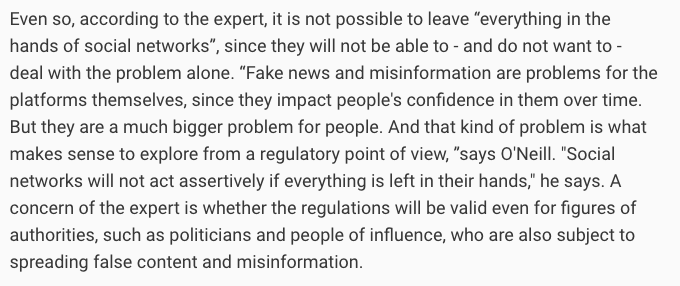
On that last point, the twin topics of misinformation and disinformation have been a big focus this past year because of the pandemic, the U.S. presidential election, and the widespread racial justice protests as well as the backlash against them. On seemingly every high-level topic, people had opposing views and cited opposing sources to back them up. And this went beyond the U.S.: I had a conversation a few months ago with a journalist from the leading business magazine in Brazil, for example, about misinformation and trust, and what regulations may be needed to address them. Our concerns about Trump’s outsized influence in shaping social media discourse mirror theirs about Bolsonaro. These challenges are simultaneously local and global.
I’m not the first to think about trust, of course. Edelman has been producing their excellent Trust Barometer every year for 21 years. The work I’m doing is by no means meant to be a replacement of their important research, but rather incorporates their findings as part of a view on how trust and truth are fundamental to humanity, how they are important to understanding of technologies that we rely on.
I’ll be sharing ongoing insights in this blog and other outlets as I develop these ideas through my research and work them into my speaking and my forthcoming book, but for now I’ll toss another coin to Edelman, since their 2021 Trust Barometer just came out this week. One of the findings was that, of all the categories of institutions, business has the most public trust right now. Not government, not NGOs, not media, but business. That’s a tremendous responsibility and opportunity for business. It’s a call to purpose and action, a call for transparency, for principled leadership.
And for those businesses we define as “tech businesses” especially, not only is the public watching, but so are the eyes of history. As a crisis of democracy unfolds in the U.S. alongside a deadly pandemic, we come face to face with issues of misinformation and disinformation, of content moderation and platform access, and the consequences of the algorithmic blinders we all wear as we consume social media and our preferred news outlets. Each of these issues comes tangled in its own technical details around trust and truth, but in every case, there is one central truth: the need to frame these debates and their outcomes not around those individuals with the largest reach but around the rights and the future of humanity at large couldn’t be more urgent.
McDonald's Netherlands faced backlash after pulling an AI-generated Christmas ad, highlighting a gap between AI output and consumer expectations for authenticity. Research indicates AI-produced...
The line between being a “Tech Humanist” as I define it and a tech ethics professional is pretty thin. My emphasis has been on...

Somewhere on my computer, I keep a collection of images of humans showing up in non-human contexts. These are contexts that are supposed to...
“In most of our cities and our nation, we don’t prioritize human life [….] We’re prioritizing traffic and the movement of vehicles.” Source: Zero...
The way strategists and designers theorize about human experience — and specifically customer experience, which is humans in the contextual role of “customer” —...
Scratch the surface of any debate about the future of work and you’ll find there an argument for Universal Basic Income. And certainly from...
As we head into 2020, I’m still obsessed with the integration of human experience. My work over the last two decades in technology has...

I’m reminded by my memories on Facebook (yes, I still have Facebook for a variety of reasons — that’s a separate post) that it...
“The first question I ask myself when something doesn’t seem to be beautiful is why do I think it’s not beautiful. And very shortly...
Rather, the most interesting things about Pokemon Go have to do with connected experiences, and the sweeping changes these are bringing: new marketing models, opportunities with...
I often work at coffee shops. A lot of other people do, too, of course. But since it’s my nature to think about meaning and...