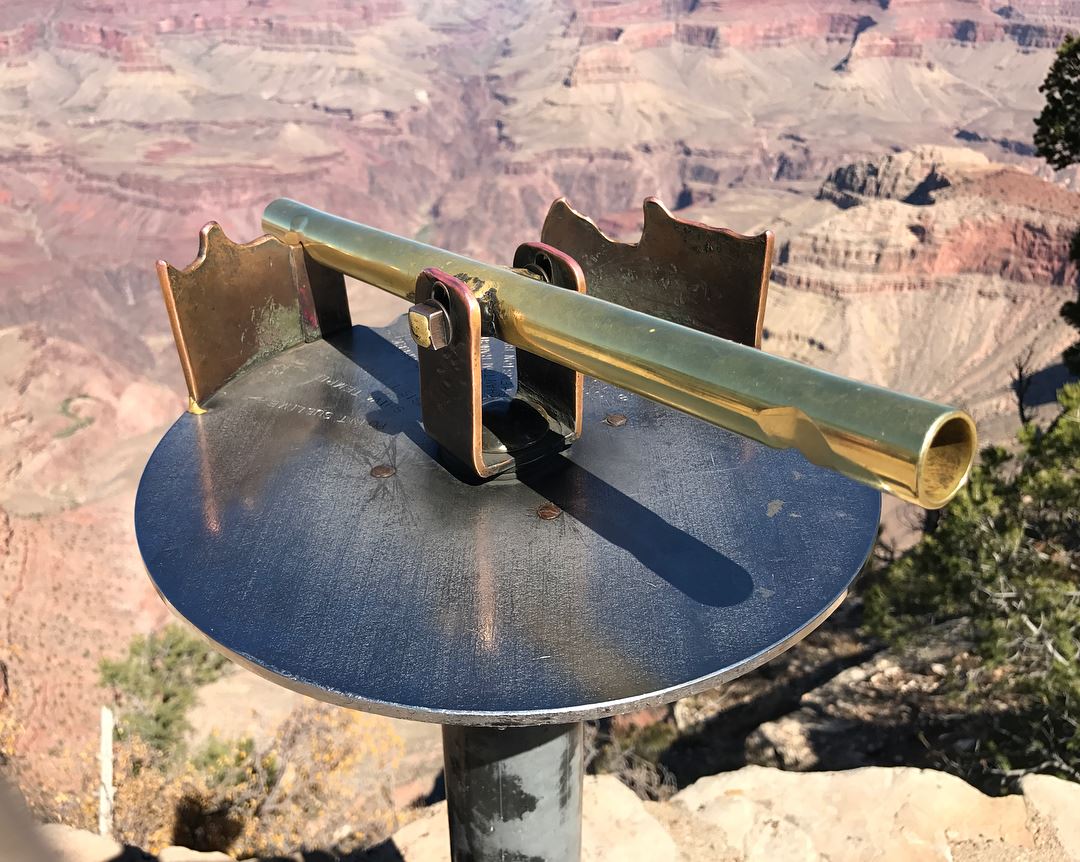
I’m reminded by my memories on Facebook (yes, I still have Facebook for a variety of reasons — that’s a separate post) that it was two years ago that Robbie and I took a side trip to the Grand Canyon and Antelope Canyon after I delivered a keynote for the Arizona CIO/CTO Forum.
I’m so glad we took some extra time to make that road trip and explore the area. Because one thing it demonstrated is that for all of the hand-wringing out there about how people take photos instead of experiencing things, what Antelope Canyon especially demonstrates, if you let it, is that the process of framing a photo shows you something — a shape, a color pattern, a play of the light — that you might have missed otherwise.






That was also the trip where I discovered this low-tech form of “augmented reality” at the Yavapai Observation Station: a viewing tube with notches for points of interest and captions for each of the notched views.
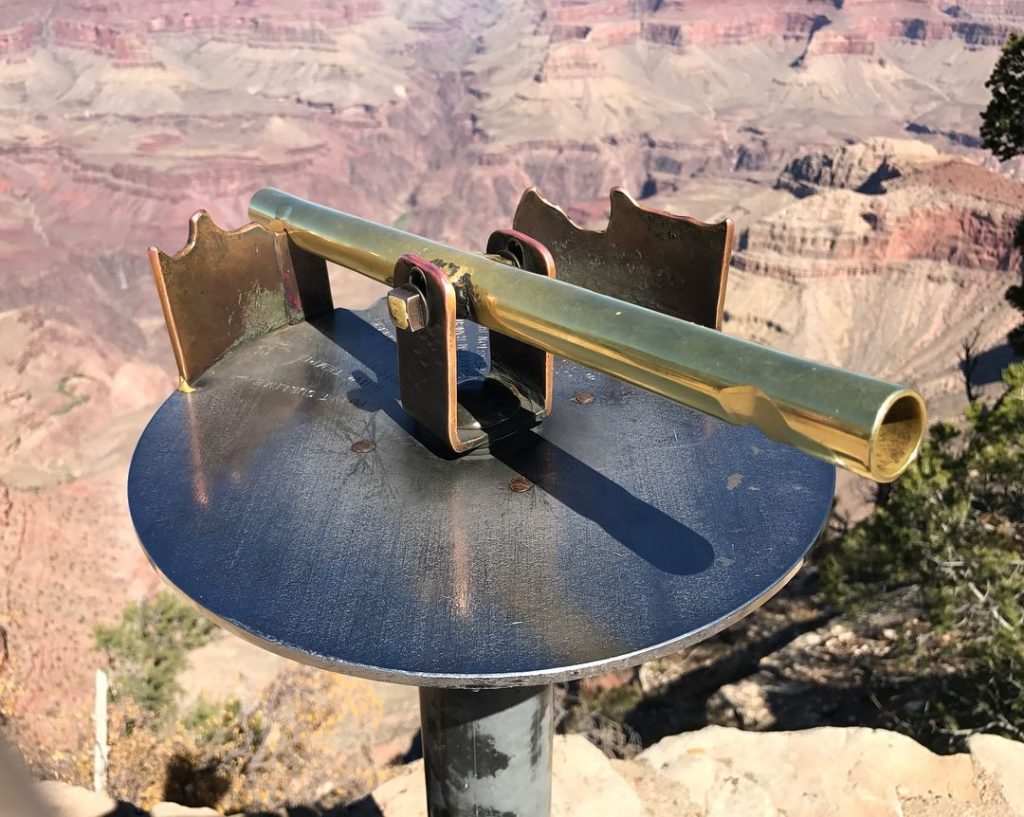

There are all sorts of ways to augment human experience for more meaning, and technology has tremendous capacity to do so at scale — if we leverage it well and with intention.
What examples have you seen where human experiences were augmented and resulted in more meaning?
McDonald's Netherlands faced backlash after pulling an AI-generated Christmas ad, highlighting a gap between AI output and consumer expectations for authenticity. Research indicates AI-produced...
The line between being a “Tech Humanist” as I define it and a tech ethics professional is pretty thin. My emphasis has been on...

Somewhere on my computer, I keep a collection of images of humans showing up in non-human contexts. These are contexts that are supposed to...
“In most of our cities and our nation, we don’t prioritize human life [….] We’re prioritizing traffic and the movement of vehicles.” Source: Zero...
The way strategists and designers theorize about human experience — and specifically customer experience, which is humans in the contextual role of “customer” —...
One of the themes shaping my work this year is “the future of trust and truth.” In an era characterized by disagreement over basic...
Scratch the surface of any debate about the future of work and you’ll find there an argument for Universal Basic Income. And certainly from...
As we head into 2020, I’m still obsessed with the integration of human experience. My work over the last two decades in technology has...
“The first question I ask myself when something doesn’t seem to be beautiful is why do I think it’s not beautiful. And very shortly...
Rather, the most interesting things about Pokemon Go have to do with connected experiences, and the sweeping changes these are bringing: new marketing models, opportunities with...
I often work at coffee shops. A lot of other people do, too, of course. But since it’s my nature to think about meaning and...