The Human Scale of Time vs. Time in Automation and Acceleration
By
Kate O'Neill
January 24, 2020
A few weeks ago I had the pleasure of seeing Koyaanisqatsi again, but for the first time on the big screen. (I’ve owned this movie and the rest of the Qatsi series on DVD for decades.) If you’ve never seen it, it’s a 1982 movie with no dialogue about a way of living that is out of scale. For a 38-year-old film, the idea feels stunningly contemporary. I was fortunate enough, thanks to the Museum of the Moving Image, to be able to see it with filmmaker Godfrey Reggio in the audience and then listen to a discussion with him about it. (And to shake his hand afterwards and tell him how magnificent his work is. It’s always a joy to be to connect directly with creators and other significant people in our lives and let them know their work matters to us.)
During the discussion, he shared so many brilliant ideas: that at the premise of the film are the “wonders that are our afflictions;” that we speak technology and we breathe technology; that “what’s happening in the future is rooted in now;” and so much more – I took four pages of notes!
A great deal of the impact of the movie is the sped-up or slowed-down nature of the footage. As Godfrey Reggio said several times during the discussion, “that which is most present is least seen,” so sometimes we have to change the way we see our surroundings to notice them.
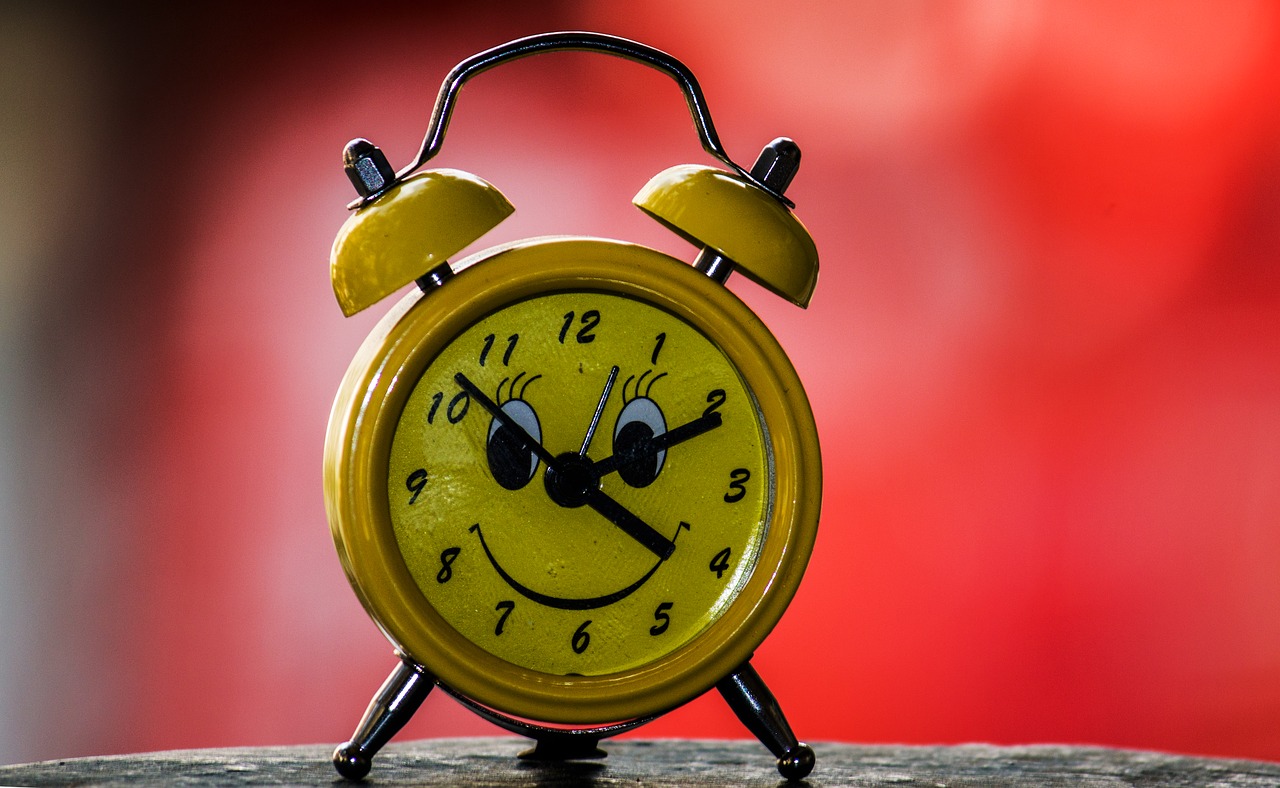
This aligns with research and thinking I’ve done around the relative experience of time in our lives, and how we can think about it in terms of the design of experiences both now and as we move into an increasingly automated future.
Human Understanding of Time
After all, even humans have different understandings of time: people who know more than one language have a different perspective on time because we’ve experienced other approaches to temporal framing, other terminology for concepts like “the day before yesterday” or “the year after next.”
People who have experienced the traumatic loss of someone they love have experienced time differently as well; in my own life, I found that dates accrued significance with time and life experience. There’s an additive effect of milestones on calendar dates, so the date a loved one died means something very different to me in the years after it happened than it did before.
Designing the Meaningful Experience of Time
For experience strategists and designers, in order to make a human-centric digital transformation it’s important to think about the practical side of these insights: how does an understanding of time affect your customers, users, visitors, patients, students, residents, and whatever roles humans play in your company, organization, city, museum, etc? How does it speed up or stand still? How is it associated with progress or delay? How is it light and how is it heavy? Does urgency matter? What can you do in the design of experience to enhance the appreciation of time relative to the experience of your brand, place, product, etc?
Last August, Greta Thunberg took a slow boat across the ocean to her appearances in New York and beyond rather than accept the carbon footprint of flying. How does time relate to value and to values for the people in your communities?
The Relative Value of Time in Automation and Acceleration
And then, a big question: How might all of this sense of time change with the continued rise of algorithmic optimization and automated efficiency? What will increasingly machine-led experiences do to the human experience and meaning of time? For most of us, automation implies acceleration, and in a sense the devaluing of time. How will we preserve the value of time in an increasingly automated world?
As machines speed up certain tasks, are there likely to be others that we deliberately slow down? We’ve already seen the rise of trends in the past two decades that prize slowness and involvement, like the methodical and very hands-on approach to making pourover coffee, for example.
It seems important that we somehow be able to retain our humanistic, nuanced, compassionate model of the passage of time amidst the acceleration of the world around us.
Which means we’re going to need to do more to understand how our sense of urgency has changed because of faster modes of communication and always-on gadgets with push notifications. We’re going to need to do more to understand how our addition of the human values of nuance, context, judgment, and such will be measured and understood in the context of sped-up workplaces driven by intelligent automation.
There are no fast and easy answers here. But for those of you designing experiences, it may be worth taking a little time to ask some of these questions, so you can design a more nuanced experience with a more humanistic understanding of time.
If this theme resonates with the conversations your company, organization, or city has been having and you’d like to hire me to advise or as a keynote speaker at an event in 2020, please do reach out. Here’s to more meaningful experiences of time for us all.
Last night, I stood in a room full of people celebrating books—human-authored books—at the Porchlight Business Book Awards ceremony. My book What Matters Next...
Sometimes the most meaningful recognition comes not from what you’ve accomplished, but from confirmation that you’re addressing the right questions at exactly the right...
Leadership often requires making unpopular decisions that disappoint stakeholders in the short term. In my latest Fast Company article, I examine how strategic disappointment...
In a recent guest article for European Business Review, I examine a paradox: the human impact of technology decisions in professional settings stands at...
In a world where technology moves at breakneck speed and business cycles compress into quarters, leaders need strategic frameworks like the Now-Next Continuum to...
In a world moving increasingly fast, leaders need powerful tools to navigate uncertainty and make responsible decisions. The Questions-Insights-Foresights Model is a systematic framework,...
Much of the speculation about the so-called “Great Resignation” began after the Bureau of Labor Statistics reported that a record 4 million Americans had...
In A Future So Bright, I wrote about the opportunity for a brighter future for education. It’s critical to ensuring we meet United Nations...
Want to start making better tech decisions?
Hear from Kate as she shares how the Now-Next Continuum moves you forward without betting everything on a single leap.
We use cookies to improve your experience
We use cookies to improve your experience and understand what’s working, so we can keep making this site more useful for you. Read our Privacy Policy.
Functional
Always active
The technical storage or access is strictly necessary for the legitimate purpose of enabling the use of a specific service explicitly requested by the subscriber or user, or for the sole purpose of carrying out the transmission of a communication over an electronic communications network.
Preferences
The technical storage or access is necessary for the legitimate purpose of storing preferences that are not requested by the subscriber or user.
Statistics
The technical storage or access that is used exclusively for statistical purposes.The technical storage or access that is used exclusively for anonymous statistical purposes. Without a subpoena, voluntary compliance on the part of your Internet Service Provider, or additional records from a third party, information stored or retrieved for this purpose alone cannot usually be used to identify you.
Marketing
The technical storage or access is required to create user profiles to send advertising, or to track the user on a website or across several websites for similar marketing purposes.