Today is Noam Chomsky‘s 96th birthday. I’m reflecting on how his revolutionary ideas about language and human cognition continue to shape our understanding of technology and humanity. My personal connection to Chomsky’s work began in 1993. As a linguistics student in college, I had already encountered his work around universal grammar as well as his infamous grammatically-valid sentence: “Buffalo buffalo Buffalo buffalo buffalo buffalo Buffalo buffalo.” But I quickly learned that he was perhaps even better known for his political commentary and advocacy. I was thrilled when he visited my campus. Picture a young Kate, captivated. Though his talk on “hegemony or absolutism” was beyond my grasp then, his dedication to truth and justice left an indelible mark.
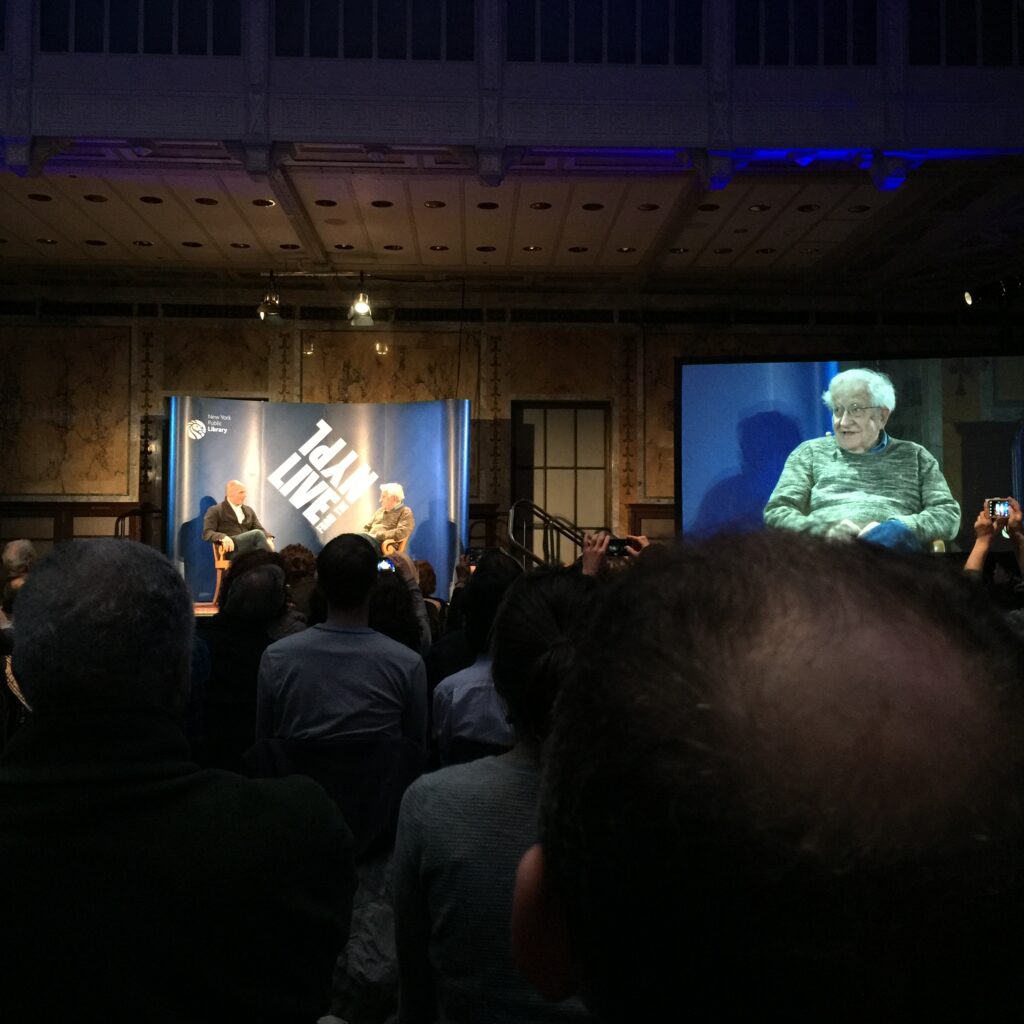
Years later, I saw that Chomsky was going to be interviewing Yanis Varoufakis at the The New York Public Library, and I thought, wow, if Chomsky is interviewing this guy, there must be something really important in what he has to say. Indeed, there was. And this year, I was delighted to find myself in a loop of intellectual continuity, having interviewed Yanis Varoufakis, just as Chomsky once did, for The Tech Humanist Show. (Episode link, if you’re curious: https://lnkd.in/e5rdZEr7)
Noam Chomsky isn’t just a linguist; he’s my ideal of a public thinker — an intellectual whose ideas have transcended academia, infiltrating everything from AI to our understanding of what it means to be human. The beauty I take from Chomsky’s infamous “buffalo” sentence isn’t just its grammatical complexity — it’s also a playful reminder that even the simplest concepts can hide deep layers of meaning.
Chomsky taught us that language isn’t just a tool for communication; it’s a window into the human mind. As we race forward into an uncertain-feeling tech-driven future, Chomsky’s legacy is more crucial than ever. His example of rigorous thinking, intellectual courage, and a relentless focus both on justice and on understanding what makes us human should be our guiding light.
Moreover, Chomsky’s work hasn’t escaped criticism, and some of it has turned out to be wrong. But isn’t that an even closer parallel to what it means to be human? Learning, trying to make sense of it all, making mistakes, re-learning, and helping others see things more clearly?
His willingness to be “productively wrong” — to propose bold ideas that generate valuable discourse — inspires my work in technology and humanity. This spirit drives both my upcoming book “What Matters Next” and our work at KO Insights, where we help organizations navigate the intersection of human experience and technological advancement with wisdom and purpose.
Let’s raise a glass to Chomsky’s 96 years of revolutionary thinking and unwavering commitment to human understanding.
How are you channeling Chomsky’s spirit in your own work?
When we talk about business strategy, we’re constantly drawing from the language of sight. We seek vision. We pursue clarity. And we value insight...
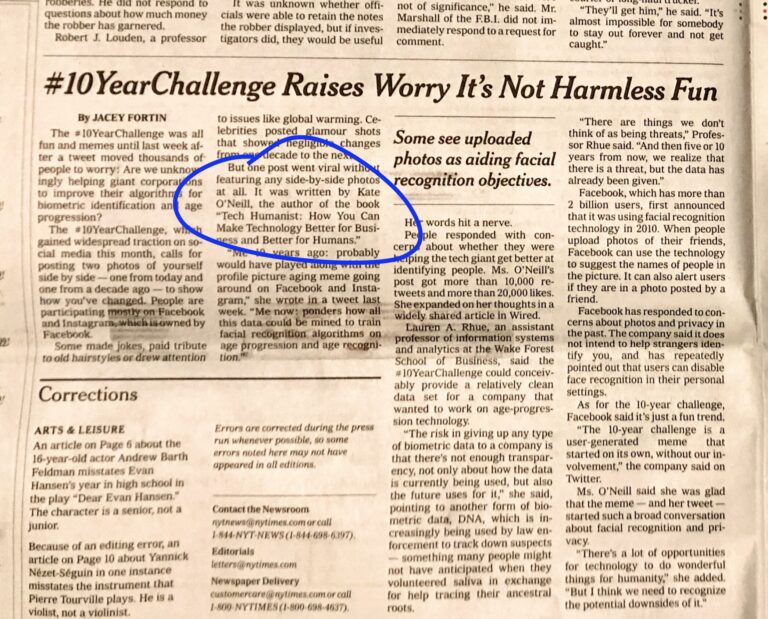
The ChatGPT Caricature Challenge has that familiar viral momentum. Upload a photo, get an AI-generated cartoon version back, share it with friends. Harmless fun,...
I deleted my X account this weekend. This post is not about that decision. But it’s not not about that decision either. It’s about...
You might notice pronouns in my email signature and wonder—why include them? The answer connects to everything I believe about building future-ready experiences and...
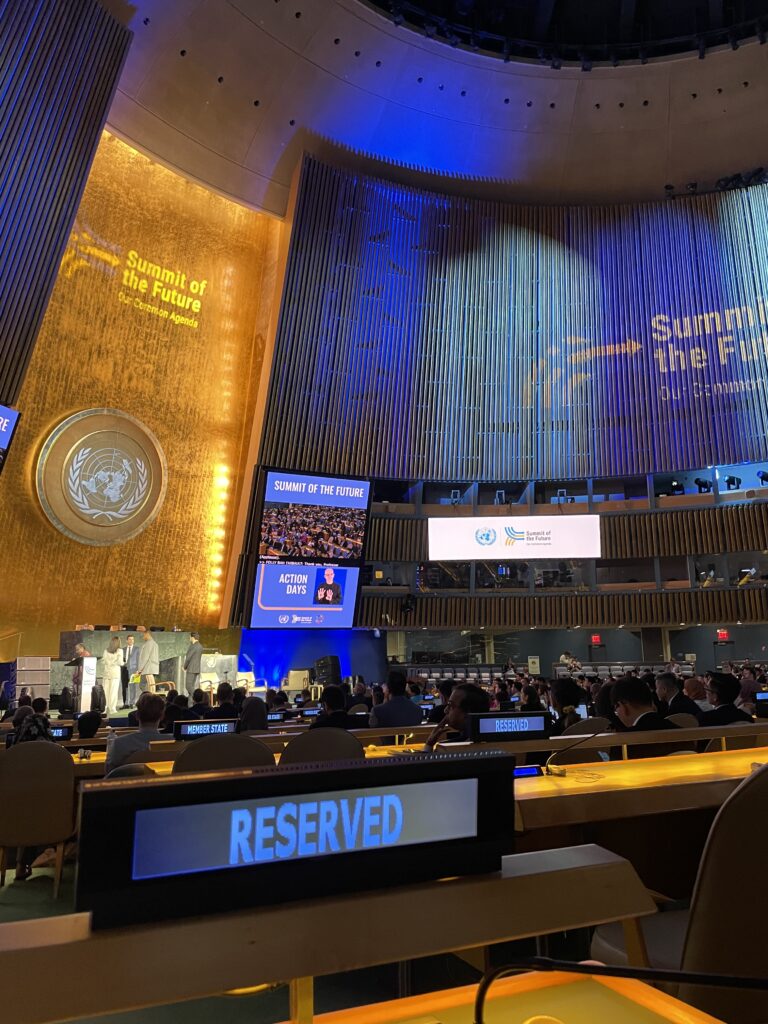
As the CEO of KO Insights and a passionate advocate for human-centered technology and tech ethics, I’ve had the incredible privilege of attending the...
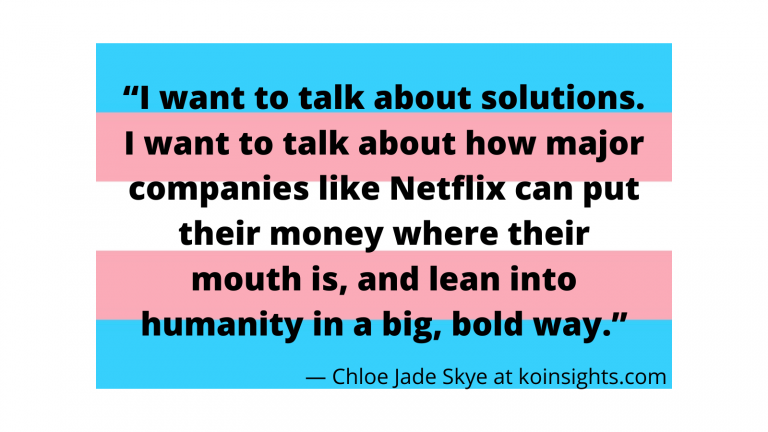
A note from KO Insights CEO Kate O’Neill:As many of you know, I was an early employee of Netflix, and I have proudly shared...
Have you been hearing references to #COP26 but not sure what it is or why it matters to you or anyone else? When I...
Have you ever had to delete parts or all of your online presence because you feared for your life? This story has been on...
Reading today both that Sumatran rhinos are extinct in Malaysia (only 80 of the species are left in Indonesia now) largely due to poaching...

Slow clap. Well played, New York Public Library. Well played. #BlackFriday is hereafter canceled; nothing will top this.
I’m back visiting my old home town of Nashville for a few days, and had a super-fun breakfast conversation with Mary Laura Philpott this...
Sitting in the Shakespeare Garden this morning, soaking up the sun and the homage to the Bard, I can’t help but think about the...