The breathless tech hype machines are working overtime on agentic AI. CEOs and analysts alike herald it as the ultimate competitive advantage, a new frontier of productivity, and if you’re late to adopt it, your business might as well be using typewriters and carrier pigeons. But the reality is more complex—and more interesting—than the relentless boosterism suggests.
Having analyzed hundreds of AI implementations across industries, I’ve seen the gap between what’s promised and what actually works. Here’s what you need to know about agentic AI: what it is, why it matters, and how to think about it through a lens that balances technological potential with human meaning.
Why Agentic AI Represents a Fundamental Shift in Technology
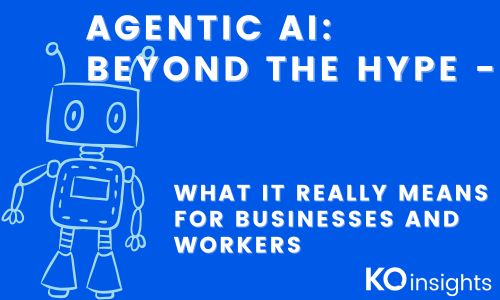
Technologists love their taxonomy, so let’s start with clarity: generative AI creates while agentic AI acts.
Your ChatGPT drafts emails when you ask. Your agentic AI notices you have three scheduling conflicts today, rearranges your calendar based on priority, sends explanatory notes to affected parties, and orders your favorite stress-reducing tea to arrive by noon. It doesn’t wait for instructions; it operates within parameters to solve problems autonomously.
This isn’t just a feature upgrade—it’s a relationship transformation. We’re moving from tools we control to digital assistants we guide. While “collaboration” has always seemed like a premature term for our interactions with machine intelligence—implying a peer relationship that doesn’t exist—agentic AI does push us toward a more nuanced partnership model than we’ve previously experienced with technology.
In my article for edu-ai.org, I explored how this shift will reshape work itself. The most successful organizations won’t be those that use AI to replace humans, but those that recognize a more powerful truth: human and artificial intelligence are complementary, not competitive.
Gartner named agentic AI the top trend for 2025, with companies from Google to Salesforce heavily investing in these systems. The projected 300% growth in AI agent adoption over the next two years translates to billions in investment. But massive investment doesn’t always yield massive value. The difference between transformative implementation and expensive disappointment lies in understanding what actually makes these systems revolutionary.
The Key Capabilities That Make Agentic AI Revolutionary
What makes agentic AI compelling isn’t computational power or conversational ability. It’s agency—the capacity to act meaningfully on our behalf through:
- Context-aware decision-making – Not just following rules but understanding situations
- Autonomous operation – Functioning without constant human hand-holding
- Learning from outcomes – Improving based on successes and failures
- Cross-system coordination – Working across platforms and applications
- Human-AI collaboration – Augmenting rather than replacing human intelligence
As I observed in my analysis of retail AI applications for Freshworks, agentic AI goes beyond predicting outcomes or generating content—it acts with purpose and reason. These systems effectively function as digital collaborators, handling everything from customer service tickets to supply chain optimization without human micromanagement.
The distinction matters. Autocomplete helps you write faster. Agentic AI drafts the entire quarterly report overnight by synthesizing data across departments, highlighting anomalies, and identifying opportunities human analysts might miss.
How Agentic AI Systems Are Transforming Business Operations
As breathless as the “When will AI take over?” headlines are, the reality of agentic AI implementation is less sci-fi and more strategic. The real question isn’t about inevitable robotic overlords, but something far more practical: “Where does AI add the most value in partnership with humans?”
Walmart’s AR-enhanced inventory system, which I analyzed for my subscriber community, offers a clear example. Their system doesn’t replace human associates—it transforms their capabilities. AI analyzes complex patterns across sales history, weather forecasts, and local events to predict demand, then uses augmented reality to help associates identify which items need attention.
This isn’t automation; it’s augmentation. The system suggests; humans decide. The technology handles computational complexity while humans maintain decision authority. This thoughtful division of labor has reduced stockouts and overstocking while freeing associates from mind-numbing scanning tasks.
The lesson? The most successful implementations don’t pit technology against humans. They transform work by letting each do what they do best.
The Bifurcated Impact on the Workforce
Agentic AI isn’t distributing its impacts evenly. It’s creating a stark bifurcation between those whose work is enhanced by AI and those whose work is targeted for elimination.
In my analysis for G2’s examination of AI agent impacts, I emphasized that the core ethical challenge around agentic AI isn’t about algorithms or automation—it’s about power. Who controls these systems? How do we ensure people retain meaningful agency?
Consider Sephora’s AI-powered virtual try-on tool. For customer-facing beauty advisors, the technology enhances their work, enabling more personalized consultations and freeing time for meaningful customer interaction. But behind the scenes in warehouses and call centers, similar systems are eliminating jobs outright.
This uneven impact creates a profound challenge: the same technology creating magical customer experiences is simultaneously eliminating traditional roles. The real question isn’t technical feasibility but human impact. Will productivity gains benefit everyone—workers, shareholders, and customers—or concentrate power and wealth?
Organizations facing this question often focus narrowly on what AI can do rather than what it should do. This myopia isn’t just ethically problematic; it’s strategically shortsighted.
Establishing Guardrails for Autonomous AI Agents
Security concerns around agentic AI go far beyond data protection. In my contribution to CSO Online, I emphasized how security still comes down to end user behavior, how organizations articulate their policies, and their understanding of both AI agent functions and the associated risks and productivity gains.
The stakes are higher when AI systems can make decisions and take actions across multiple platforms without human intervention. Traditional security frameworks aren’t sufficient when the system itself has agency.
Every deployment of autonomous AI demands clear answers to critical questions: What actions is this system permitted to take? Under what circumstances does it require human review? How do we monitor for drift from intended behavior? Who is accountable when something goes wrong?
Without these guardrails, organizations risk not just security breaches but unintended consequences that can damage trust, reputation, and business outcomes.
Implementing Agentic AI with a Tech Humanist Approach
The most successful agentic AI implementations share a common characteristic: they’re designed with a clear understanding of human meaning and value. They don’t just optimize for efficiency; they optimize for human outcomes.
This approach isn’t just ethical—it’s practical. AI systems that enhance human capabilities rather than simply replacing them deliver more sustainable value over time. They create experiences that are more efficient and more meaningful.
In my G2 interview, I advised against waiting for perfect regulations that won’t come, and instead advocated for building governance frameworks that prioritize human outcomes. The organizations that thrive won’t be those with the most advanced AI but those who build thoughtful guardrails around it.
The competitive advantage lies in understanding that technological advancement and human flourishing can be mutually reinforcing. This isn’t optimistic handwaving; it’s a pragmatic recognition that sustainable business success depends on creating meaningful value for actual humans.
Three Critical Questions for Business Leaders
When evaluating agentic AI initiatives, apply these three filters to separate hype from real value:
- Does this enhance human capability or merely replace it? Technology that amplifies human potential creates more sustainable value than technology that simply eliminates jobs.
- Have we considered impacts across our entire ecosystem? Look beyond visible roles to understand how technology ripples through your organization. The shiny customer interface may hide warehouse automation that devastates communities where you operate.
- Are we investing as heavily in human potential as in technology? Organizations that balance technological and human development create more resilient, innovative systems than those pursuing automation alone.
Companies treating AI as a purely technical challenge miss the larger opportunity. The real value lies in understanding how technology transforms human experiences at scale. This requires seeing beyond immediate efficiency gains to longer-term impacts on all stakeholders.
Moving Forward: Throughline Thinking for the AI Era
What separates winning agentic AI implementations from expensive failures isn’t technological sophistication but strategic integration. The question isn’t “How much can we automate?” but “How can we create the most value at the intersection of human and artificial intelligence?”
When we apply what I call “throughline thinking” from my book What Matters Next, we look beyond immediate efficiency gains to understand longer-term consequences across multiple dimensions—technological, human, economic, and societal. This approach reveals opportunities that narrower perspectives miss.
In my comments to G2, I emphasized that the future of work isn’t a zero-sum game between humans and machines. It’s about creating synergies that make both more capable, more productive, and ultimately, more human. This isn’t wishful thinking; it’s strategic foresight.
Organizations that understand this create more resilient, adaptable systems than those pursuing automation alone. They recognize that the most valuable innovations aren’t those that simply do things faster, but those that enable us to do things that matter more.
The greatest opportunity of our AI era isn’t replacing human work. It’s rediscovering what makes us human.
Interested in integrating agentic AI with a human-centered approach in your organization? Subscribe to my newsletter for regular insights, or contact my team for strategic advisory services focused on creating meaningful value at the intersection of technology and humanity.