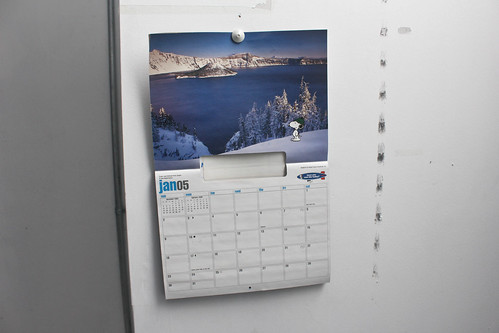
 We had a lot of calendars around the house when I was growing up. Probably one in every room. The kind that used to be given away by businesses with their name and address on the bottom, so they’d hang on the wall all year as a reminder of their service. They’d display a month at a time, and as a kid it was a big thrill to be allowed to be the one to turn the page on the first of each month.
Every calendar acknowledged pretty much the same pre-printed holidays: the usuals, like Easter and Christmas and Independence Day, and then the oddballs, like Arbor Day and Grandparents Day and Boxing Day.
I remember noticing Boxing Day every year and wondering about where and why it was significant. I only knew that in other countries, there were traditions and meanings associated with it, just as there are for Christmas where I grew up.
I also figured that it was more than what we did with it. The day after Christmas in my family was for standing in the returns lines at stores and getting money back so you could buy what you had really wanted all along.
By now it seems some in the U.S. have adopted Boxing Day and subsumed it into their own traditions. For some people there’s a sort of special relaxed pace about the day; for some it’s a big shopping day: many people go shopping in the after-Christmas sales hoping to score a deal for themselves or maybe for the friend or relative they’re planning to see after the holidays. A kind of purposeful procrastination.
It’s different from Christmas, yet dependent on Christmas as an extension of its meaning. But the difference between Christmas and Boxing Day is merely social contract; it’s just a matter of adoption, and critical mass.
It’s funny how tradition can seem absurd at first. Get enough people to agree that Boxing Day is a day when we wear boxes on our head to remind ourselves to think outside the box, and you might just have yourself a cultural movement.
That in any case would be an attempt to be intentional about the day and about what it signifies. And I think that’s worth consideration. It’s worth using the days we designate as somehow special in the most meaningful ways we can. By contrast, people often seem to find themselves stuck observing Christmas traditions they’re no longer excited about, that no longer resonate with them, because they either haven’t come to terms with how to adapt or they don’t want to risk disappointing others. But that can leave us stifled and suppressed, when we could instead be experiencing the fulfillment of a day of mindful focus on, say, the spirit of giving and togetherness, or whatever other values and significance you would want the holiday to hold for you.
The same is true for any other day, really. There’s no point following someone else’s idea of how your days should be lived. You get to decide what’s meaningful, and live according to that. Life’s too short for anything else.
I’m working on some offerings that can help you do just that, by the way: in 2016, I’ll be rolling out a series of workshops, webinars, books, talks, reports, and these blog posts and my emails. So I hope you’ll stay in touch if you want to find out more about that.
But however you do it, I hope that in 2016, you get closer to staying focused on what’s meaningful and make it align and connect throughout your life. You deserve it. We all do. And not for just one day a year. Even if you wear a box on your head to do it.
We had a lot of calendars around the house when I was growing up. Probably one in every room. The kind that used to be given away by businesses with their name and address on the bottom, so they’d hang on the wall all year as a reminder of their service. They’d display a month at a time, and as a kid it was a big thrill to be allowed to be the one to turn the page on the first of each month.
Every calendar acknowledged pretty much the same pre-printed holidays: the usuals, like Easter and Christmas and Independence Day, and then the oddballs, like Arbor Day and Grandparents Day and Boxing Day.
I remember noticing Boxing Day every year and wondering about where and why it was significant. I only knew that in other countries, there were traditions and meanings associated with it, just as there are for Christmas where I grew up.
I also figured that it was more than what we did with it. The day after Christmas in my family was for standing in the returns lines at stores and getting money back so you could buy what you had really wanted all along.
By now it seems some in the U.S. have adopted Boxing Day and subsumed it into their own traditions. For some people there’s a sort of special relaxed pace about the day; for some it’s a big shopping day: many people go shopping in the after-Christmas sales hoping to score a deal for themselves or maybe for the friend or relative they’re planning to see after the holidays. A kind of purposeful procrastination.
It’s different from Christmas, yet dependent on Christmas as an extension of its meaning. But the difference between Christmas and Boxing Day is merely social contract; it’s just a matter of adoption, and critical mass.
It’s funny how tradition can seem absurd at first. Get enough people to agree that Boxing Day is a day when we wear boxes on our head to remind ourselves to think outside the box, and you might just have yourself a cultural movement.
That in any case would be an attempt to be intentional about the day and about what it signifies. And I think that’s worth consideration. It’s worth using the days we designate as somehow special in the most meaningful ways we can. By contrast, people often seem to find themselves stuck observing Christmas traditions they’re no longer excited about, that no longer resonate with them, because they either haven’t come to terms with how to adapt or they don’t want to risk disappointing others. But that can leave us stifled and suppressed, when we could instead be experiencing the fulfillment of a day of mindful focus on, say, the spirit of giving and togetherness, or whatever other values and significance you would want the holiday to hold for you.
The same is true for any other day, really. There’s no point following someone else’s idea of how your days should be lived. You get to decide what’s meaningful, and live according to that. Life’s too short for anything else.
I’m working on some offerings that can help you do just that, by the way: in 2016, I’ll be rolling out a series of workshops, webinars, books, talks, reports, and these blog posts and my emails. So I hope you’ll stay in touch if you want to find out more about that.
But however you do it, I hope that in 2016, you get closer to staying focused on what’s meaningful and make it align and connect throughout your life. You deserve it. We all do. And not for just one day a year. Even if you wear a box on your head to do it. 
Last night, I stood in a room full of people celebrating books—human-authored books—at the Porchlight Business Book Awards ceremony. My book What Matters Next...
Today, as we honor Dr. Martin Luther King Jr.’s legacy, it’s worth sitting with an uncomfortable truth: things feel hard right now. Not just...
Sometimes the most meaningful recognition comes not from what you’ve accomplished, but from confirmation that you’re addressing the right questions at exactly the right...
Leadership often requires making unpopular decisions that disappoint stakeholders in the short term. In my latest Fast Company article, I examine how strategic disappointment...
In a recent guest article for European Business Review, I examine a paradox: the human impact of technology decisions in professional settings stands at...
In a world where technology moves at breakneck speed and business cycles compress into quarters, leaders need strategic frameworks like the Now-Next Continuum to...
In a world moving increasingly fast, leaders need powerful tools to navigate uncertainty and make responsible decisions. The Questions-Insights-Foresights Model is a systematic framework,...
The following is an excerpt from What Matters Next, a new book due out in January 2025 by Kate O’Neill. Future-Ready, not “Future-proof” I...

One of the perks of being a lifelong sociolinguistics nerd (full disclosure: there aren’t that many) is when I can take notice of the...
The following is an excerpt from my latest book, A Future So Bright: How Strategic Optimism and Meaningful Innovation Can Restore Our Humanity and...
Much of the speculation about the so-called “Great Resignation” began after the Bureau of Labor Statistics reported that a record 4 million Americans had...

In A Future So Bright, I wrote about the opportunity for a brighter future for education. It’s critical to ensuring we meet United Nations...